
About
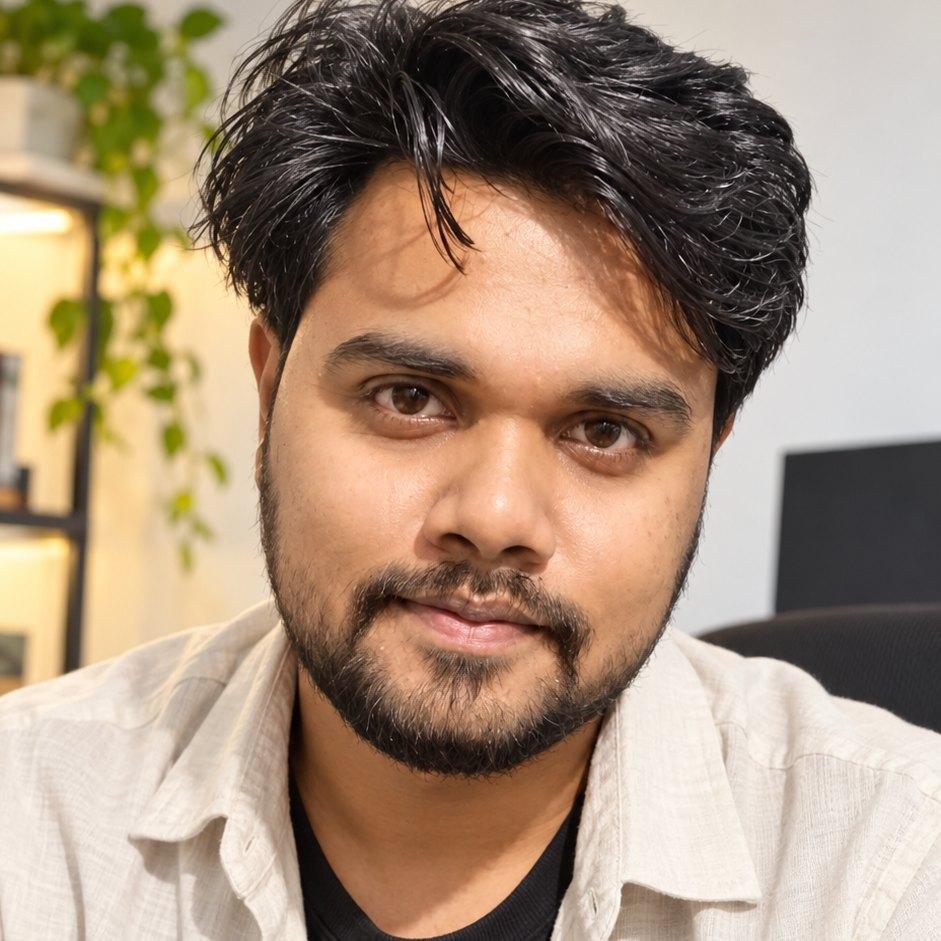
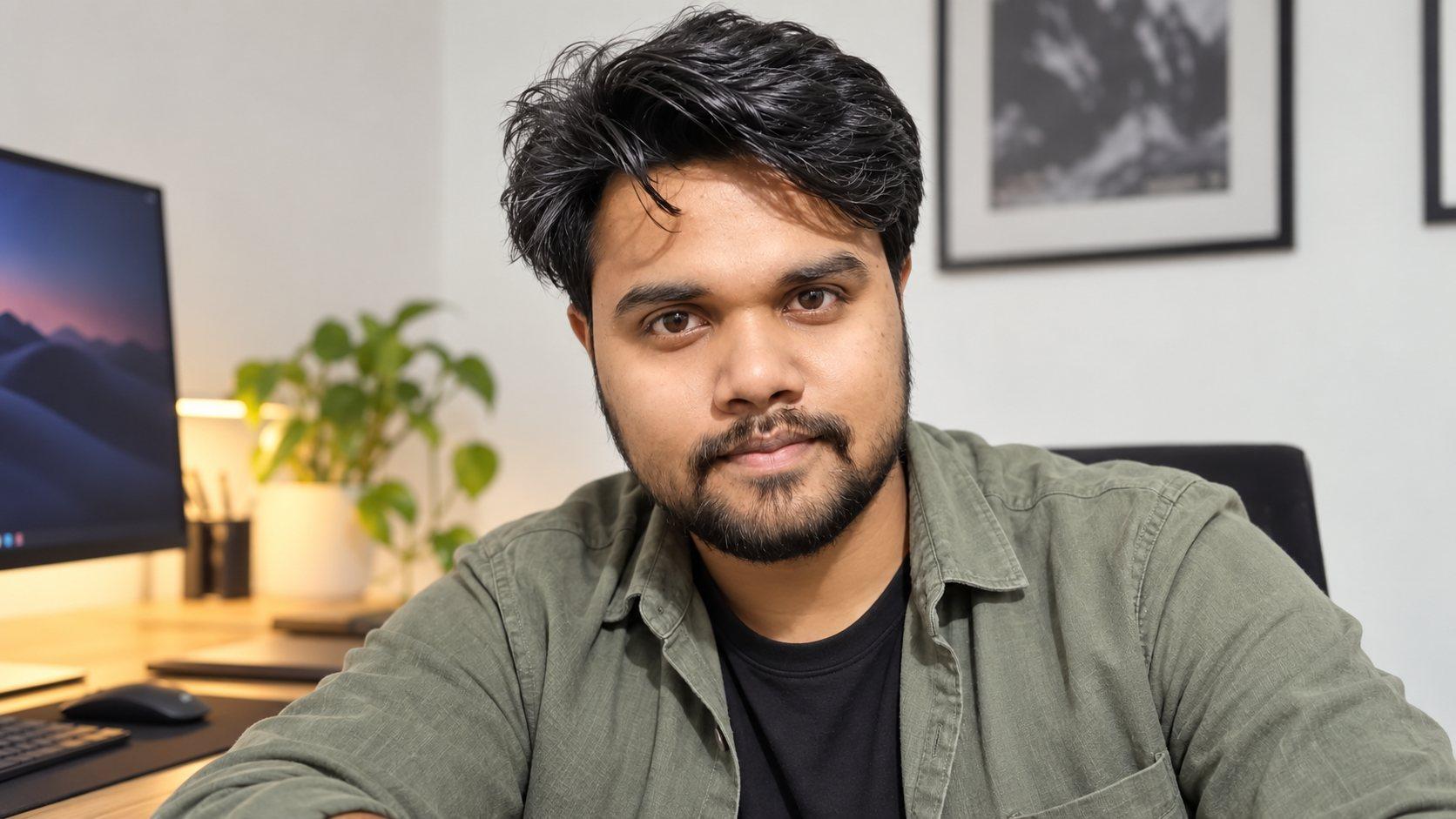
Shreyansh Kumar Singh
AI & Full-Stack Engineer
Shreyansh Kumar Singh is an AI & full-stack engineer in Pune, India. He pairs nearly four years of production enterprise software at RamanByte with a body of independent AI work — retrieval-augmented generation, LLM agent systems and autonomous security tooling. His distinguishing habit: he writes down what a system must be before he builds it, then attacks it as an outsider would once it exists.
IN BRIEFKey facts
- Role
- AI & full-stack engineer — applied AI (RAG, LLM agents) on a production full-stack foundation
- Based in
- Pune, Maharashtra, India
- Current work
- Full-Stack Developer at RamanByte Pvt. Ltd., since January 2023 — the Classroom+ learning platform and client systems built on it (experience)
- Education
- Bachelor of Technology (B.Tech), Computer Science, Dr. A.P.J. Abdul Kalam Technical University, 2017–2021
- Independent work
- Nine projects across nine domains — RAG, autonomous security testing, AI QA, 3D, physics simulation, editorial, enterprise architecture and scroll-driven motion (the range)
- Open to
- Full-time or hybrid roles: applied AI engineering first, then AI-focused full-stack, AI security tooling, and senior .NET / Angular
- Elsewhere
- LinkedIn · GitHub (Shreyanskumarsingh20) · X (@ShreyanshK98)
01Production work and independent AI projects
For nearly four years at RamanByte he has built the learning platform Classroom+ and client systems on top of it. That work runs for real institutions: a peer-reviewed journal portal, admin, student and faculty apps, and a two-app artisan marketplace launched on a fixed public date.
Alongside it he has built nine independent projects across nine domains: retrieval-augmented generation, autonomous security testing, AI quality assurance, 3D, physics simulation, editorial products, enterprise architecture and scroll-driven motion. The production work taught him what fails when real users arrive. The independent work is where he applies that lesson to newer problems.
02How he approaches a new problem
He starts with purpose. Before any code, he asks why the thing needs to exist and who is trying to get something done with it. A feature without a reason, in his view, is only another button.
He treats complexity as a chain to be made legible: interface, API, logic, database, model, and the real world it touches. His job is to make that chain feel like one simple experience to the person using it.
He assumes failure. What happens if the API dies, if a user taps twice, if traffic jumps a hundredfold overnight? For the Dada Udyogini launch this was concrete: he designed DadaLoad, a distributed k6 load-testing system run across ten machines, so the team could prove capacity before launch day instead of hoping for it.
03AI engineering: RAG, agents and LLMs
He treats AI as infrastructure rather than a feature: the model sits inside the system's loop from the first design, and its output is reviewed like any engineer's code.
- Retrieval-augmented generation. In Sarthi, an AI relationship-manager copilot for banking, he split the pipeline into four modules — embeddings, vector storage, retrieval and generation — so each can be inspected, tested and replaced on its own, and one weak stage can't hide inside the others.
- Agent systems. Nythera runs an LLM agent loop through a seven-phase penetration-testing workflow and confirms each finding with evidence before reporting it. HallogenAI coordinates eight specialized agents to verify bug fixes against live application behavior.
- Grounded products. BookVerse AI generates summaries, timelines, mind maps and a tutor grounded in the source text, across three model paths including local Ollama — and keeps running with no API key.
- Model fluency. He works with Groq, Gemini and Ollama, chooses between hosted and local models by cost and reliability, and designs for the model being unavailable.
- Responsible design. Dangerous capabilities default to off — Nythera's internal-network scanning needs explicit authorization. Data provenance is enforced — Antarang uses only verified Wikimedia sources and refuses to fabricate copyrighted artworks.
04Full-stack engineering skills
Enterprise full-stack (.NET and Angular)
Designs ASP.NET Web API endpoints and SQL Server schemas first, gives every response a typed Angular model, and builds validated reactive forms on top. Shipped Angular 16–18, ASP.NET Core 8, EF Core, PostgreSQL, Redis and SignalR, and Flutter for mobile.
Modern web (Next.js and React)
Next.js and React 19 with TypeScript and Tailwind; GSAP, Lenis and Canvas 2D for motion. This portfolio uses plain CSS sticky positioning in place of a parallax library — choosing the simplest tool that works.
3D and simulation on the web
A walkable 3D museum in React Three Fiber and four zero-dependency physics simulators. In the museum, throttling a focus check to about ten times a second improved perceived smoothness more than any frame-rate tuning.
Security testing
Works from OWASP Top 10, CWE mapping and the PTES workflow. The standard is strict: a finding without physical evidence is discarded, not downgraded.
The full list, with the project behind each skill, is on the skills page.
05How he specifies and audits his work
Almost every repository ships with a project specification and a handoff document, written so a stranger could pick the work up cold. Visual design is written as a token system before any component exists. Every number in his simulators traces to a published model.
After shipping, he audits his own work. His Sarthi audit ranks findings from P0 to P3 and leads with the worst: no authentication on any endpoint and guessable record IDs. He published it rather than quietly patching it — which says more about his standards than any list of skills.
06What he is like to work with
He is direct. He would rather hear the real problem than sit through a meeting about nothing, and he asks three questions of every new piece of work: what is actually broken, what has been tried, and what done looks like.
He is self-critical without being slow. He has shipped nine projects in five languages while still writing the specification and the audit for each. Speed, in his view, makes rigor affordable — not optional.
He works across roles naturally: specification writer, designer, security reviewer and systems architect, often in the same week on the same project — which he sees as the modern engineer's job rather than a collection of side skills.
What drew him to engineering is the moment a confusing system becomes legible. It's why so much of his independent work starts from a subject he wanted to understand rather than a brief: Indian art history placed properly on the world timeline in Antarang, the physics of blast waves and orbits in The Evolution, the culture of collecting in The Collector's Pulse.
07Career timeline
- 2017 – 2021B.Tech, Computer ScienceDr. A.P.J. Abdul Kalam Technical University.
- Jan 2023Joins RamanByte, PuneFull-stack developer on Classroom+: ASP.NET Web API, SQL Server, Angular and Flutter.
- Oct 2023 – Mar 2024A Journal of Management (PIBM)Rebuilt a hardcoded template into the live submission portal for a peer-reviewed journal (ISSN 2455-8796) — 93 commits.
- At RamanByteClassroom+ admin, student and faculty apps; Dada UdyoginiProduction apps for institutions, and a two-app Flutter marketplace launched on a fixed public date, load-tested beforehand with DadaLoad across 10 machines.
- 2026The rangeSarthi, Nythera, HallogenAI, BookVerse AI, Antarang, The Collector's Pulse, The Evolution, VaultIQ and Revuelto — each with a written specification, most with an audit.
- Aug – Sep 2026Vidur Industry ConnectAdmin dashboard, request lifecycle, near-duplicate guard and citizen profile suite on a multi-tenant Flutter + ASP.NET Core platform.
08Roles he is open to
Work where AI is load-bearing and correctness matters: document understanding, agent systems, security, and products that must survive real users. He is open to full-time or hybrid roles in applied AI engineering, AI-focused full-stack engineering, security tooling, and senior .NET and Angular work.